


A Familiar Policy in an Unfamiliar Landscape
Bangladesh’s renewed commitment to Rohingya repatriation, anchored in historical precedents from the late 20th century, is unfolding against a vastly altered geopolitical and security environment.
Foreign Minister Khalilur Rahman recently reaffirmed that Dhaka intends to pursue repatriation efforts based on past successes achieved under previous governments. However, analysts warn that the structural conditions that enabled earlier returns no longer exist.
Unlike the relatively centralized state authority in Myanmar during the 1978 and 1992 repatriation phases, today’s Myanmar is deeply fragmented, with competing centers of power, including the military junta and multiple ethnic armed organizations.
The Arakan Army Factor: A New Power Broker
At the center of this transformation is the Arakan Army (AA), which has consolidated significant territorial and administrative control across large parts of Rakhine State.
The AA’s growing influence presents a complex challenge for repatriation efforts:
-
-
-
- It operates parallel governance structures in northern Rakhine.
- It has been accused of conducting population screening and recruitment campaigns among Rohingya communities.
- It is not a formal party to past bilateral agreements between Bangladesh and Myanmar.
-
-
This raises a critical operational question: Who guarantees safety and rights for returning Rohingya?
Security analysts note that any repatriation framework that excludes the AA risks being ineffective on the ground, where the group exerts de facto authority.
Bangladesh–Myanmar Relations Under Strain
Diplomatic relations between Bangladesh and Myanmar remain fragile, shaped by mistrust, border tensions, and repeated failed repatriation attempts since 2017.
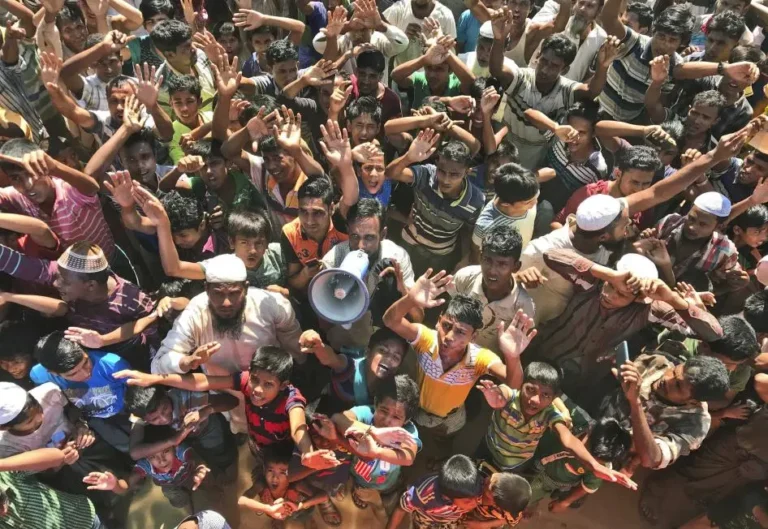
Bangladesh continues to host over one million Rohingya refugees, primarily in camps in Cox’s Bazar, placing immense pressure on local resources, security, and host communities.
While Dhaka has consistently emphasized bilateral engagement, progress has been stalled due to:
-
-
-
- Myanmar’s internal conflict and lack of unified governance
- Absence of verifiable guarantees for returnees
- Continued reports of violence and instability in Rakhine State
-
-
Recent cross-border concerns—including maritime security incidents and alleged armed group movements—have further complicated relations.
Lessons from 1978 and 1992: Still Relevant?
The government’s strategy draws heavily on two historical repatriation efforts:
-
-
-
- 1978 influx: Approximately 200,000 Rohingya returned under an agreement facilitated during the presidency of Ziaur Rahman
- 1992 influx: Around 236,000 refugees repatriated under Prime Minister Khaleda Zia
-
-
However, experts highlight key differences:
Then Now
Centralized Myanmar state Fragmented authority
Limited international scrutiny Strong global legal and human rights focus
Bilateral diplomacy sufficient Requires multilateral engagement
“The past offers procedural lessons, but not a blueprint,” said a Dhaka-based diplomatic analyst.
International Law and the Limits of Repatriation
Bangladesh’s position—that repatriation must be safe, voluntary, and dignified—aligns with international legal standards, including the principle of non-refoulement under refugee law.
The ongoing case at the International Court of Justice (ICJ), where Myanmar faces allegations of genocide against the Rohingya, further complicates repatriation prospects.
Legal experts note:
-
-
-
- Conditions in Rakhine must meet minimum safety and rights benchmarks
- Forced or premature returns could violate international law
- Accountability processes may influence future repatriation frameworks
-
-
Additionally, the United Nations continues to stress that repatriation must be linked to citizenship rights, freedom of movement, and long-term protection guarantees.
Humanitarian Pressures and Security Risks
Inside Bangladesh, the prolonged refugee presence is creating layered challenges:
-
-
-
- Rising criminal networks in camps
- Allegations of forced recruitment by armed groups
- Increased vulnerability to trafficking and exploitation
-
-
These dynamics intersect with regional security concerns, particularly as armed actors in Rakhine expand influence.
For Bangladesh, repatriation is no longer solely a humanitarian priority—it is increasingly viewed as a national security imperative.
The Road Ahead: Between Diplomacy and Reality
Despite reaffirmed commitments, the pathway to repatriation remains uncertain.
Prime Minister Tarique Rahman’s administration faces a complex balancing act:
-
-
-
- Sustaining international pressure on Myanmar
- Engaging emerging power actors like the Arakan Army
- Ensuring refugee protection while managing domestic strain
-
-
Without a political settlement inside Myanmar and credible guarantees for Rohingya rights, analysts warn that large-scale repatriation may remain aspirational.
Conclusion
Bangladesh’s strategy to revisit past repatriation models underscores both urgency and limitation. While history provides diplomatic reference points, the current crisis is shaped by new actors, unresolved legal battles, and a fragmented state across the border.
In this evolving landscape, repatriation is no longer just a bilateral issue—it is a test of regional stability, international law, and the global community’s commitment to one of the world’s most protracted refugee crises.