


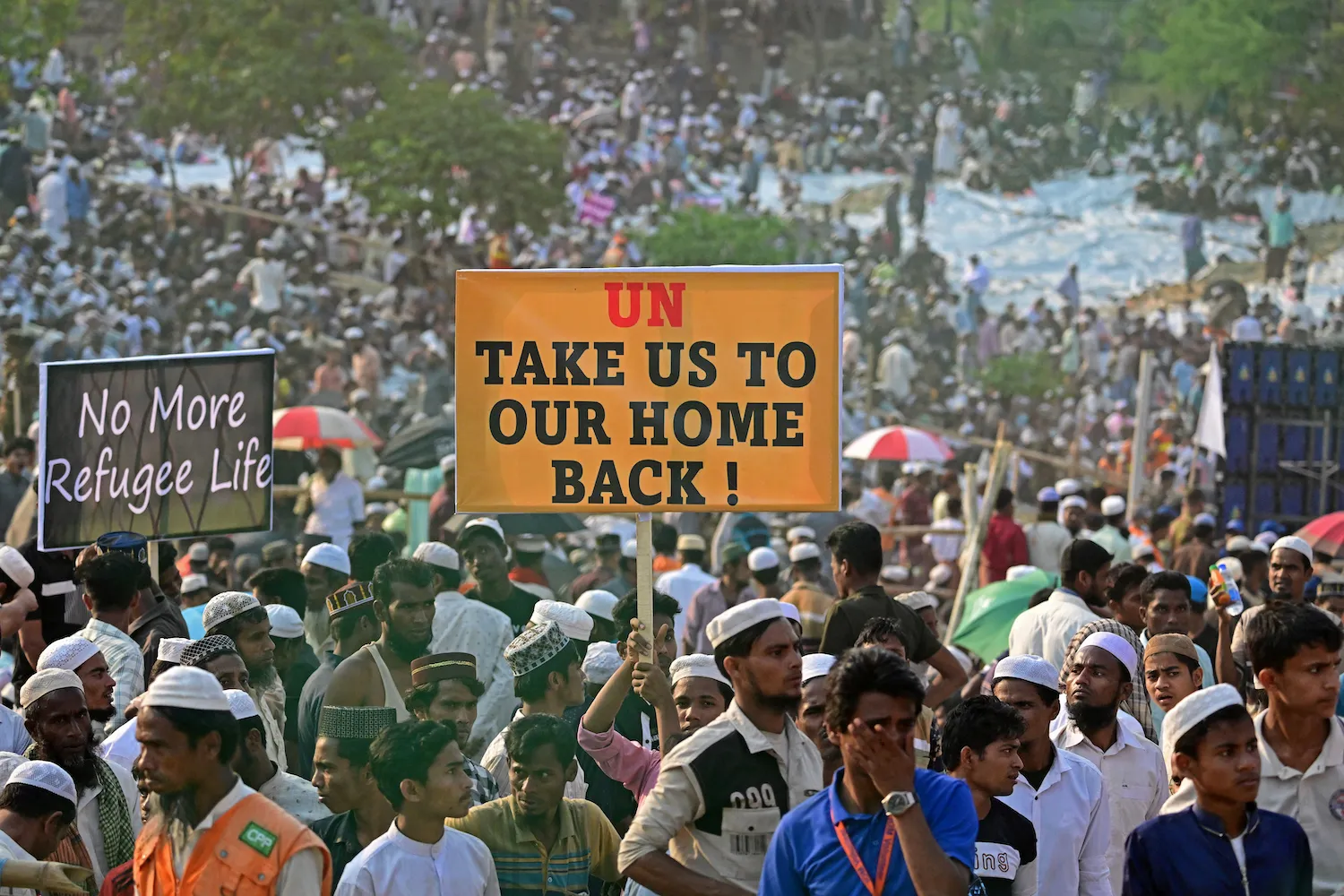
The Arakan Rohingya National Organisation (ARNO) has released a comprehensive policy brief cautioning the international community against what it describes as a “false normalisation” of Myanmar’s political situation, warning that such approaches risk deepening the Rohingya crisis.
The document, titled “Rohingya Rights, Accountability, and Reality in Myanmar,” outlines significant shifts in Myanmar’s political and territorial dynamics, arguing that current international policies are increasingly detached from realities on the ground.
Fragmented Control Undermines State Authority
According to ARNO, Myanmar’s governance landscape—particularly in Rakhine State—has fundamentally changed. Large areas are no longer under the effective control of the military junta but instead fall under the de facto administration of the Arakan Army.
Despite this fragmentation, Rohingya communities continue to face severe restrictions, insecurity, and systemic abuses.
“Safe return, state protection, and administrative responsibility must now be understood within a fractured governance structure,” the brief notes.
Elections ‘Designed to Legitimize Control’
The policy brief strongly criticises the junta’s planned electoral process, describing it as a mechanism to convert coercive rule into a façade of constitutional legitimacy.
ARNO argues that the process:
-
-
-
- Lacks credibility due to the exclusion of opposition and ongoing conflict
- Does not address past atrocity crimes
- Risks reducing international pressure on Myanmar
-
-
The organisation warns that recognising such elections could entrench impunity and prolong genocidal policies against the Rohingya.
International Law and Accountability Remain Central
The brief emphasises that Myanmar’s obligations under international law—particularly the Genocide Convention—remain unchanged.
It highlights ongoing proceedings at the International Court of Justice (ICJ), noting that provisional measures requiring Myanmar to prevent further harm and preserve evidence have not been implemented.
ARNO further stresses that:
-
-
-
- Denial of Rohingya identity persists
- Conditions for safe return remain absent
- Attacks and rights violations continue
-
-
The organisation also calls for continued legal efforts at international courts, including the International Criminal Court (ICC) and other jurisdictions.
Rohingya Identity and Citizenship Reaffirmed
Reaffirming the Rohingya’s legal status, the brief states that they remain nationals of Myanmar under international law, despite decades of systematic discrimination and the 1982 Citizenship Law that rendered them stateless.
ARNO stresses that any sustainable solution must prioritise:
-
-
-
- Recognition of Rohingya identity
- Restoration of citizenship
- Protection of civil and human rights
-
-
Repatriation Must Meet Minimum Conditions
The policy brief cautions against premature repatriation efforts, warning they could be unsafe and unsustainable without verifiable guarantees.
It outlines minimum conditions for return, including:
-
-
-
- Voluntary, safe, and dignified repatriation
- Freedom of movement and livelihood
- Independent monitoring mechanisms
- Full restoration of rights and citizenship
-
-
Policy Recommendations
ARNO calls on the United Nations, states, and humanitarian actors to:
Reject recognition of the junta’s electoral process
Enforce ICJ provisional measures
Maintain pressure for accountability
Ensure humanitarian access in Rakhine State
Avoid supporting involuntary repatriation
The organisation also urges engagement strategies that reflect the realities of fragmented territorial control without legitimising rights violations.
Conclusion: Crisis ‘Evolving, Not Resolved’
ARNO concludes that the Rohingya crisis is not a past event but an evolving emergency shaped by political denial and territorial fragmentation.
“Superficial solutions risk entrenching genocide and instability,” the brief warns, calling for policies grounded in legal accountability, human rights, and current realities.


