


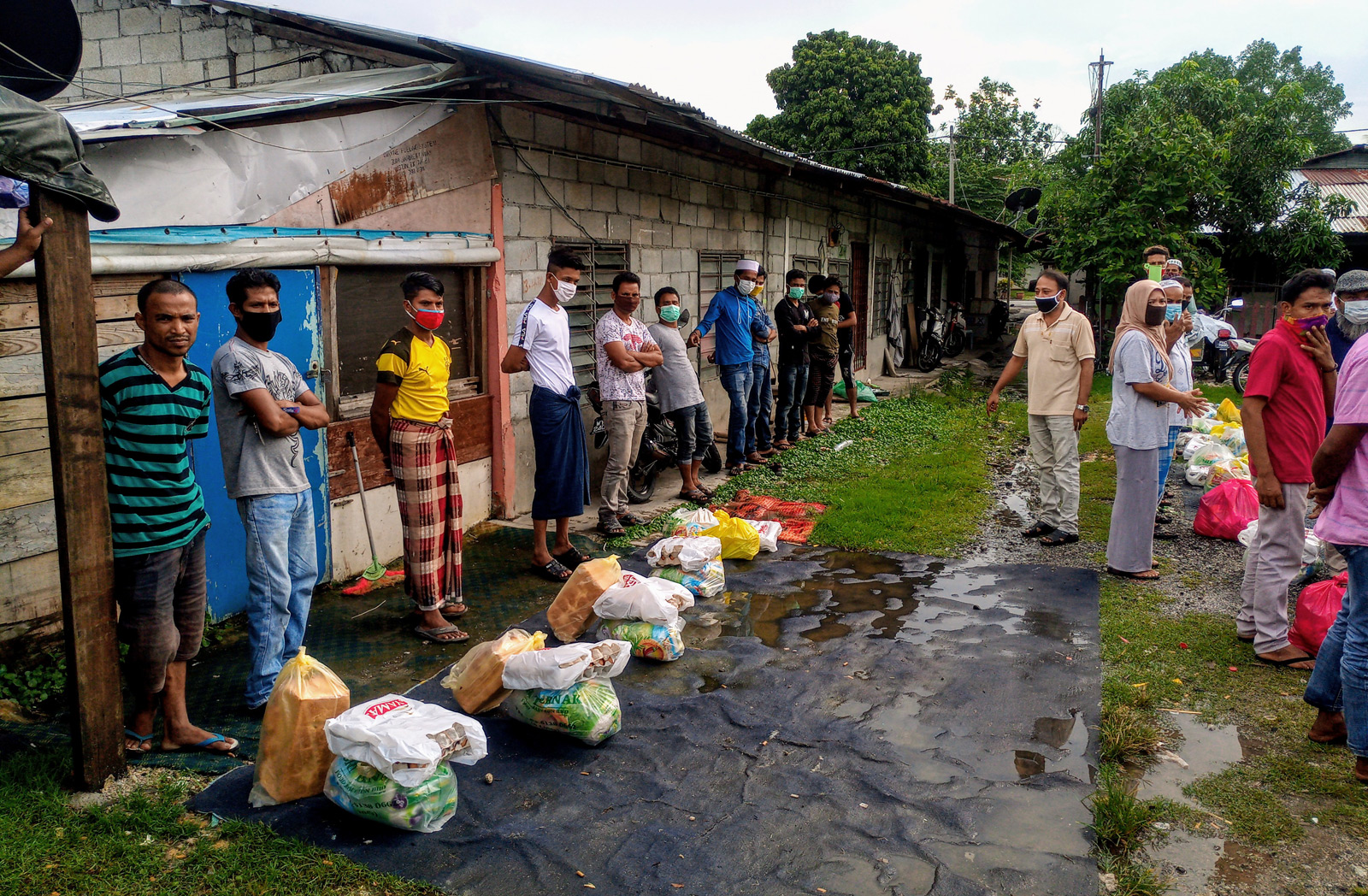
A renewed wave of fake news, online disinformation and hate speech targeting Rohingya refugees in Malaysia is raising serious concerns among rights organizations and refugee advocates, who warn that politically driven misinformation is increasing xenophobia, public hostility and intimidation against one of the country’s most vulnerable communities.
Fact-checkers from Agence France-Presse (AFP) have identified numerous false claims circulating on Facebook, Instagram and TikTok, including fabricated quotations, AI-generated images, manipulated videos and misleading statistics portraying Rohingya refugees as a threat to Malaysian society.
Malaysia currently hosts more than 215,000 refugees and asylum seekers registered with the United Nations High Commissioner for Refugees (UNHCR), including over 126,000 Rohingya, making them the country’s largest refugee population.
Political Disinformation Intensifies Before Elections
According to analysts, anti-Rohingya disinformation has circulated for years following Myanmar’s military operations that forced hundreds of thousands of Rohingya to flee. However, experts say the recent increase appears closely linked to political narratives emerging ahead of Malaysia’s general elections expected next year.
“Refugees have become a convenient proxy through which wider anxieties about the economy, migration, public services, security and national identity are channeled and expressed in the most violent and hateful language,” said Lilianne Fan, head of the Secretariat of the Malaysian Advisory Group on Myanmar.
She added that much of the messaging ultimately seeks to portray the Malaysian government as ignoring public concerns.
AI-Generated Falsehoods Spread Online
Among the viral false claims was a Facebook post from a page calling itself “Rohingya Malaysia,” alleging that Rohingya refugees were demanding control of a Malaysian town.
AFP’s fact-checking team found that the page and its content had been generated using artificial intelligence and that no such Rohingya organization existed.
In another widely shared case, a fabricated Instagram image falsely depicted a Rohingya man assaulting a Malaysian citizen, accompanied by inflammatory anti-Rohingya captions.
AFP later traced the account owner in the United States, who confirmed the image was fake and denied ever posting it.
“Algorithms reward outrage over accuracy, allowing isolated incidents to be generalized to the entire Rohingya refugee population,” Fan said.
Refugees Fear Growing Hostility
Malaysian civil society organizations say online hate campaigns are increasingly translating into fear within the refugee community.
An official from the advocacy group Rohingya Rights Response, speaking anonymously for security reasons, said many refugees are becoming reluctant to report abuse or seek assistance because they fear being targeted online or facing public hostility.
“Community members are increasingly hesitant to share their experiences or seek support because they fear becoming targets of online abuse or public hostility,” the official said.
Government Calls for Balanced Approach
Responding to growing public demands for deportations, Malaysian Home Minister Saifuddin Nasution Ismail said last month that the government would seek to balance national security with humanitarian responsibilities while cooperating with countries hosting large migrant populations.
Prime Minister Anwar Ibrahim also reaffirmed Malaysia’s commitment to working through the Association of Southeast Asian Nations (ASEAN) to address the wider Rohingya crisis with Myanmar.
“Through our common effort, we will work to resolve the predicament of Rohingya refugees in Bangladesh and also here,” Anwar said during a joint press conference with Bangladesh’s Prime Minister.
Background
The Rohingya, a predominantly Muslim ethnic minority from Myanmar’s Rakhine State, have faced decades of persecution and displacement. More than one million Rohingya refugees remain displaced across South and Southeast Asia, with Bangladesh and Malaysia hosting the largest refugee populations.


