


A Crisis Without an End
Nearly eight years after fleeing mass violence in Myanmar, more than 1.4 million Rohingya refugees remain trapped in sprawling camps in southeastern Bangladesh, with no clear pathway to return home.
The Rohingya exodus began in 2017, when Myanmar’s military launched a brutal campaign of killings, sexual violence and mass displacement in Rakhine State, forcing hundreds of thousands of Rohingya civilians to flee across the border.
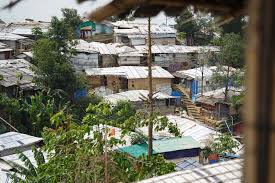
Today, 33 refugee camps in Ukhia and Teknaf in Cox’s Bazar form the largest refugee settlement in the world, a vast humanitarian landscape of bamboo shelters, barbed-wire fences and chronic uncertainty.
According to the United Nations High Commissioner for Refugees, about 1.2 million Rohingya are currently registered in Bangladesh. However, local officials and humanitarian observers estimate the population has now reached around 1.4 million, driven by natural population growth and continued arrivals.
Since early 2024, an estimated 150,000 additional Rohingya have reportedly fled renewed violence and instability inside Myanmar, further intensifying an already protracted humanitarian emergency.
Diplomatic Promises, Little Progress
During Ramadan last year, Bangladesh’s interim leader Muhammad Yunus expressed hope that Rohingya refugees might soon celebrate Eid al-Fitr in their homeland.
Standing alongside António Guterres, he pledged renewed diplomatic engagement aimed at achieving safe, voluntary and dignified repatriation.
Yet the reality on the ground tells a different story.
Nearly a decade after the mass displacement, no large-scale repatriation has taken place, and conditions inside Myanmar remain deeply unstable.
Bangladesh’s Refugee Relief and Repatriation Commissioner Md. Mizanur Rahman has acknowledged that the ongoing armed conflict and political fragmentation inside Myanmar have effectively stalled any meaningful progress.
“The current internal situation in Myanmar has not created conditions conducive to safe and sustainable repatriation,” he said.
The Core Issue: Citizenship and Security
For Rohingya refugees themselves, the central issue remains unchanged: citizenship, safety and fundamental rights.
Most refugees say they are willing to return to Myanmar only if they are recognized as citizens and guaranteed protection from persecution — conditions that remain absent.
The Rohingya were effectively rendered stateless under Myanmar’s 1982 Citizenship Law, a policy widely criticized by international human-rights organizations for institutionalizing ethnic discrimination.
Without legal recognition, many refugees fear that returning to Myanmar would simply recreate the cycle of persecution that forced them to flee.
Regional and Global Implications
The prolonged displacement of more than a million Rohingya is no longer only a humanitarian issue — it has become a regional security and geopolitical challenge.
Bangladesh has repeatedly warned that hosting such a large displaced population indefinitely is unsustainable, placing pressure on local communities, resources and national security.
Meanwhile, instability inside Rakhine State, where multiple armed actors now operate amid the broader Myanmar civil war, has created a complex and unpredictable environment for any future repatriation.
Human-rights advocates also warn that the crisis risks becoming a “forgotten emergency” as global attention shifts to other conflicts.
Accountability Still Pending
Despite mounting evidence of mass atrocities committed against the Rohingya, international accountability has progressed slowly.
Legal proceedings linked to the International Court of Justice and the International Criminal Court continue, but justice remains distant for many victims.
Advocates argue that meaningful accountability for the 2017 atrocities is essential not only for justice, but also for creating the conditions necessary for any safe return.
Without accountability, they warn, the root causes of the crisis will remain unresolved.
A Generation Growing Up in Exile
Inside the camps of Cox’s Bazar, nearly half of the Rohingya population are children, many of whom have never seen their ancestral homeland.
Restrictions on education, employment and freedom of movement have created what humanitarian groups describe as a “lost generation” at risk of long-term marginalization.
Community leaders warn that prolonged confinement without political solutions could lead to deeper social and security challenges in the future.
An Urgent International Responsibility
Analysts say resolving the Rohingya crisis will require coordinated international pressure on Myanmar, sustained humanitarian funding and concrete guarantees of citizenship, security and rights for the displaced population.
Until those conditions exist, more than a million Rohingya refugees remain caught between an uncertain present and an unresolved past.
For many, the question is no longer simply when they will return home.
It is whether the world will ensure that they can return safely, with dignity and with justice.