


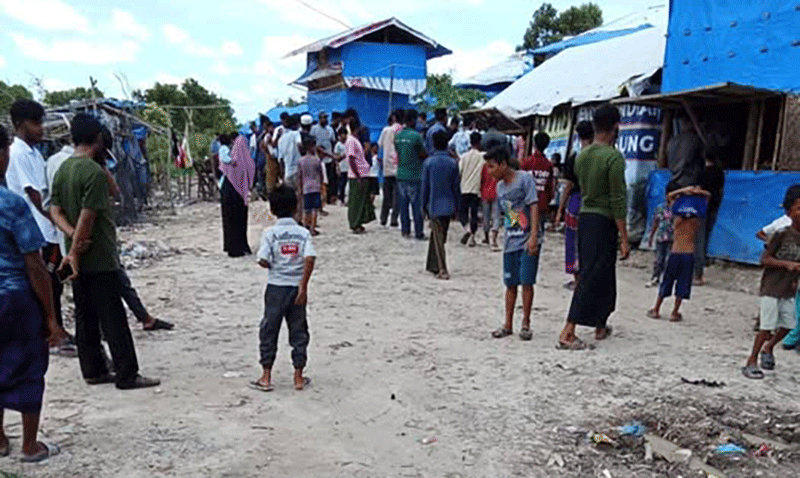
Rohingya refugees in Indonesia are facing a worsening humanitarian crisis as access to basic assistance sharply declines, leaving many without adequate food, shelter, or healthcare.
While refugees expressed gratitude for the protection provided by the Indonesian authorities and local communities, many say their living conditions have deteriorated significantly in recent months.
Since early 2026, a large number of refugees have struggled to meet essential daily needs. Financial assistance from the International Organization for Migration (IOM) has been substantially reduced, with support now limited primarily to the most vulnerable groups, including families with young children, pregnant women, and the elderly. The majority of refugees currently receive no assistance.
Most of the Rohingya arrived in Indonesia between 2023 and 2024 after fleeing violence and persecution in Myanmar. Many were relocated to Pekanbaru in late 2024, where they initially received temporary shelter and limited financial support through IOM programs.
However, refugees report that over time, assistance has diminished and, in some cases, they were required to vacate their accommodations. As a result, numerous families are now homeless or living in precarious conditions.
Financial support has also declined. Individual monthly stipends have reportedly been reduced from IDR 1.2 million to IDR 1 million, while family assistance has dropped to IDR 700,000—amounts refugees say are insufficient to cover rent, food, clean water, and other basic necessities.
Refugees further allege disparities in aid distribution, noting that other refugee groups receive higher levels of support—estimated at around IDR 1.7 million per person—raising concerns about inequality in access to services such as education and healthcare.
The situation has intensified in 2026, with refugees reporting that IOM assistance has largely ceased. According to accounts shared with local media, at least two Rohingya individuals, including a child, have died due to lack of access to basic healthcare.
Indonesia currently hosts an estimated 2,000 Rohingya refugees. More than 1,300 are based in Pekanbaru, Riau province, while others reside in Aceh and Medan. In Pekanbaru alone, the refugee population includes approximately 600 men, 400 women, and 300 children.
Refugees say their demands remain basic: access to food, shelter, healthcare, and education. Without urgent humanitarian intervention, they warn of an escalating crisis that could result in widespread hunger and preventable deaths.


