


A Crisis Deepening Beyond the Camps
Rohingya refugees in Bangladesh are entering a new phase of humanitarian crisis as reductions in United Nations food assistance expose structural weaknesses in the global response to one of the world’s largest protracted displacement situations.
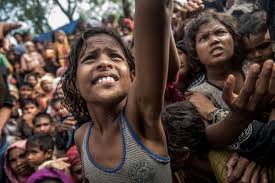
More than 1.2 million Rohingya remain confined to overcrowded camps in Cox’s Bazar, almost entirely dependent on international aid. With monthly food rations now reduced under a tiered system introduced by the World Food Programme (WFP), thousands of families are being pushed toward acute food insecurity.
For many refugees, the reduction from $12 to as low as $7 per person per month is not merely a budgetary adjustment—it represents a tipping point between survival and starvation.
Aid Politics and the Global Funding Retreat
The current ration cuts are not an isolated policy shift but a direct outcome of declining international donor commitments.
Humanitarian funding for the Rohingya response has sharply deteriorated since 2023, falling to roughly half of required levels in 2025 and plunging further to just 19 percent in 2026. This contraction reflects a broader trend of “donor fatigue,” as global attention shifts toward other crises, including conflicts in Ukraine, Gaza, and elsewhere.
Aid agencies have increasingly been forced into austerity governance—prioritizing the “most vulnerable” through targeted assistance frameworks. While technically rational, this approach has introduced new layers of inequality and social tension داخل the camps.
Critically, the tiered aid model risks normalizing sub-minimum survival thresholds, effectively institutionalizing hunger among segments of the refugee population.
Bangladesh Under Strain: Strategic and Domestic Pressures
Bangladesh, which hosts the Rohingya population, finds itself under growing economic, political, and security pressure.
Dhaka has repeatedly emphasized that the Rohingya crisis is temporary and has resisted integrating refugees into the formal labor market. The prohibition on employment, while politically sensitive domestically, has entrenched aid dependency and limited self-reliance pathways.
At the same time, Bangladesh is navigating complex regional dynamics with Myanmar. The ongoing instability in Rakhine State, including the rise of the Arakan Army (AA), has effectively stalled repatriation prospects.
From a strategic standpoint, Bangladesh faces a dual dilemma:
-
-
-
- Sustaining a large, aid-dependent refugee population amid declining global support
- Managing border security risks linked to trafficking, armed group activity, and maritime instability
-
-
Security analysts warn that worsening camp conditions—particularly food shortages—could increase vulnerability to recruitment by criminal networks or armed actors operating along the –Myanmar frontier.
Human Security Collapse Inside the Camps
The reduction in food aid is compounding an already fragile protection environment.
Field reports indicate rising levels of:
-
-
-
- Child labor and early marriage
- Human trafficking and forced migration attempts
- Kidnapping and gender-based violence
- Informal and illicit economic activities
-
-
The closure or downsizing of education programs due to funding cuts has further exacerbated these risks, leaving a generation of Rohingya youth without access to structured learning or future opportunities.
Testimonies from camp residents suggest a growing sense of desperation. Families are increasingly forced to adopt negative coping strategies, including reducing meal frequency, taking on debt, or exposing children to dangerous work environments.
Legal Accountability: The Limits of International Protection
The Rohingya crisis remains one of the most prominent unresolved cases under international law, particularly in relation to crimes committed during the 2017 military crackdown in Myanmar.
Proceedings at the International Court of Justice (ICJ), initiated under the Genocide Convention, and investigations by the International Criminal Court (ICC), have established a legal framework for accountability. However, these processes have yet to translate into tangible improvements in refugee protection or conditions on the ground.
From a legal perspective, several critical gaps remain:
-
-
-
- Burden-sharing failure: There is no binding mechanism compelling states to equitably support host countries like Bangladesh
- Right to adequate food: Under international human rights law, including the International Covenant on Economic, Social and Cultural Rights (ICESCR), access to sufficient food is a fundamental right—yet current aid levels fall below minimum standards
- Durable solutions deficit: Voluntary repatriation, local integration, and third-country resettlement remain largely stalled
-
-
This disconnect highlights a broader structural issue: international legal recognition without enforcement capacity.
Geopolitical Stalemate and the Repatriation Deadlock
Efforts to repatriate Rohingya refugees to Myanmar have repeatedly failed due to the absence of security guarantees, citizenship rights, and political stability in Rakhine State.
The rise of non-state armed actors, particularly the Arakan Army, has further complicated the situation. Control over large parts of Rakhine has shifted away from Myanmar’s central military, creating fragmented authority and uncertainty over governance.
For Rohingya refugees, this translates into a prolonged state of limbo:
-
-
-
- Return is unsafe and politically unviable
- Integration in Bangladesh is restricted
- International resettlement opportunities remain minimal
-
-
As a result, humanitarian aid—however insufficient—remains the only lifeline.
Protests, Desperation, and the Risk of Escalation
Recent protests inside the camps against food ration cuts signal a turning point. Demonstrators have framed access to food not as charity, but as a basic right.
The language of protest—“Food is a right, not a choice”—reflects a shift from passive dependency to rights-based assertion. However, without policy changes, such tensions risk escalating into broader instability inside the camps.
Humanitarian actors warn that prolonged deprivation could trigger:
-
-
-
- Increased unrest inside camps
- Expansion of informal power structures and armed influence
- Cross-border migration surges
-
-
Conclusion: A System Under Strain
The Rohingya crisis is no longer defined solely by displacement—it is increasingly shaped by neglect.
Food aid cuts are not just a humanitarian issue; they are a manifestation of geopolitical priorities, funding politics, and legal limitations. As Bangladesh continues to shoulder disproportionate responsibility, the absence of a coordinated international response raises urgent questions about the sustainability of the current model.
Without renewed political will, increased funding, and enforceable accountability mechanisms, the trajectory points toward deeper instability—both within the camps and across the Bangladesh–Myanmar region.