


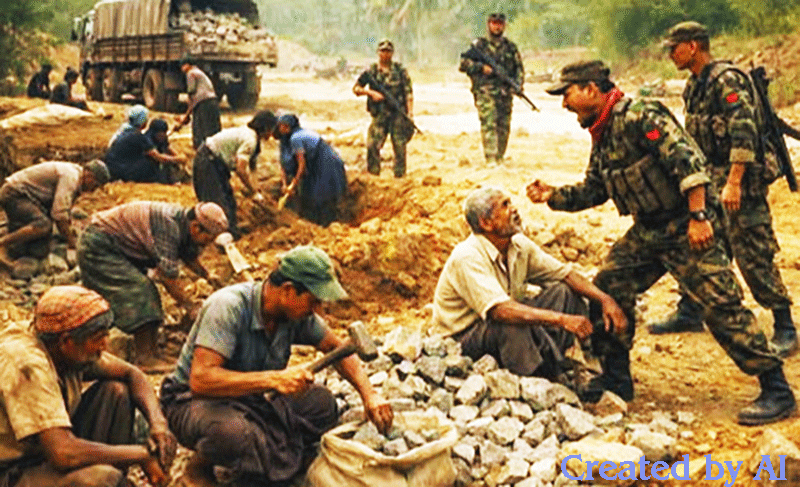
Rohingya residents in northern Maungdaw Township have accused the Arakan Army (AA) of systematic forced labor practices, claiming that dozens of individuals from each village are being compelled to work under harsh conditions without pay.
According to multiple local sources, the AA has been requiring approximately 50 Rohingya from each village in Area (6) to participate in labor assignments linked to infrastructure and military-related construction. The work reportedly involves repairing a key road connecting Kyi Kan Pyin Village and Nga Kura Village.
Three-Day Rotations of Unpaid Labor
Residents say that between April 2 and April 15, individuals from Paung Zar and Hlabaw Zar villages were required to perform three consecutive days of labor. Tasks included breaking large stones, loading materials onto trucks, and digging bunkers and tunnels near an AA-controlled base in Kyi Kan Pyin.
Workers allege they were not provided with food, water, or wages, and were instead required to cover their own expenses while performing physically demanding labor.
“I had to buy and cook my own food. The AA did not provide anything—not even water or wages,” said one worker, who requested anonymity after returning home. “Those who have no money are forced to do even harder labor. When I became weak and tried to rest, I was shouted at. It felt like modern-day slavery.”
Long Hours and Harsh Conditions
Another laborer described the daily routine as grueling, involving long hours and significant physical strain.
“We had to leave our homes at 6 a.m. and walk to the worksite. After working until 6 p.m., we had to walk back again,” he said.
Local sources confirmed that on April 16, similar labor demands were imposed on residents from Kyauklayga and Mingalargyi villages, indicating that the system operates on a rotating basis across multiple communities.
Economic Strain on Vulnerable Communities
Community members say the labor demands come at a time of severe economic hardship, exacerbating already fragile living conditions.
A Rohingya shopkeeper described the situation as deeply distressing:
“People are already struggling to survive and cannot even afford two meals a day. Forcing them to work without pay is an unbearable burden. For widows and the poorest families, it is like pushing them deeper into suffering.”
Broader Concerns
The allegations highlight growing concerns over the treatment of civilians in conflict-affected areas of Rakhine State, where competing authorities and ongoing instability have left vulnerable populations exposed to exploitation and rights violations.
Independent verification remains difficult due to restricted access to the region.


