


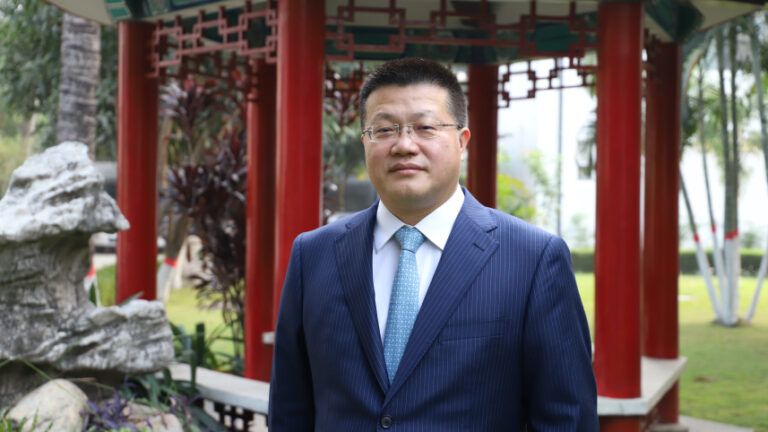
China is seeking to mediate between Bangladesh and Myanmar to advance the repatriation of Rohingya refugees, Chinese Ambassador to Bangladesh Yao Wen said, as Rohingya representatives reiterated that they would not return without guarantees of citizenship, safety and the right to live on their ancestral land.
Speaking at a symposium in Dhaka under the Cosmos Dialogue Ambassadors’ Lecture Series, Yao said China had been taking practical steps to support negotiations between Bangladesh and Myanmar.
“A local friend once told me sincerely that many people provide lip service, but only China is actually doing practical things to proceed with the repatriation,” Yao said, according to a report by United News of Bangladesh.
The symposium, titled “Bangladesh-China Relations: Prognosis for the Future,” focused on bilateral relations and regional cooperation.
Rohingya Delegation Visits Rakhine State
Yao’s remarks came a day after a 20-member Rohingya delegation visited Myanmar’s Rakhine State to assess conditions in areas proposed for repatriation.
Mizanur Rahman, Bangladesh’s Refugee Relief and Repatriation Commissioner, said after returning from the visit that conditions in Maungdaw Township, where returnees were expected to be resettled, were “not bad.”
“We have seen many Rohingyas doing trade and business there. As per my data, 80 percent of the people there are Rohingya,” he told reporters in Cox’s Bazar.
However, Rohingya delegates expressed serious concerns about the proposed return process.
Mohammad Selim, a member of the visiting delegation, said Rohingya refugees would not agree to return unless Myanmar restored their citizenship rights.
“We don’t want to live in a camp in our country. We want to live on our own land in our village. We don’t want financial assistance,” Selim said.
Citizenship and Safety Remain Central Concerns
More than 750,000 Rohingya fled to Bangladesh following the Myanmar military’s 2017 crackdown in Rakhine State. Combined with those who had escaped earlier waves of persecution, Bangladesh now hosts more than one million Rohingya refugees.
At least two formal repatriation attempts have been made since the mass displacement. Both failed after no Rohingya volunteered to return, citing the absence of credible guarantees of citizenship, security and fundamental rights.
Bangladesh and Myanmar signed a repatriation agreement in late 2017 with China’s support.
Under a proposed pilot project, Myanmar has offered to receive more than 1,000 Rohingya refugees. However, Rohingya community members and rights advocates have repeatedly maintained that any return must be voluntary, safe, dignified and sustainable.
China Calls for Stronger Bangladesh Ties
During the symposium, Yao also said Bangladesh and China had consistently supported each other on issues involving their core national interests.
He said both countries pursue independent foreign policies and support the protection of sovereignty, independence, territorial integrity and national dignity.
Yao called on Bangladesh and China to oppose protectionism, economic decoupling, unilateral sanctions and the creation of international “fences and barriers.”
“We should defend true multilateralism, promote greater democracy in international relations and work together to make global governance fairer and more equitable,” he said.
The ambassador added that China was willing to support the modernization of Bangladesh’s industries and help improve the quality and competitiveness of products made in the country.
Iftekhar Ahmed Chowdhury, president of the Cosmos Foundation, chaired the discussion, while Cosmos Foundation Chairman Enayetullah Khan delivered the welcoming remarks.
Background: Rohingya Repatriation
Rohingya refugees have consistently said they want to return to Myanmar, but only when conditions allow them to live safely as citizens with freedom of movement, access to education and healthcare, and the right to return to their original villages.
No large-scale repatriation has taken place since the 2017 exodus.