


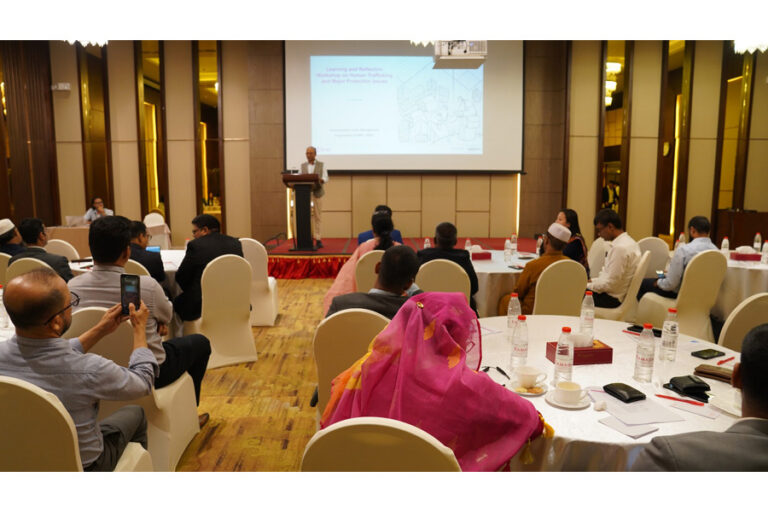
Human trafficking remains a persistent and complex challenge in the Rohingya refugee camps, despite ongoing interventions by humanitarian and law enforcement agencies, experts said at a multi-stakeholder workshop on Saturday.
The discussion, held in Cox’s Bazar, highlighted systemic gaps that continue to hinder effective prevention and justice for trafficking survivors. Participants identified key barriers including weak evidence management, the extreme vulnerability of displaced populations, heavy caseloads faced by police, frequent staff turnover, procedural difficulties in filing cases, and the prevalence of informal settlements of criminal matters.
The workshop—focused on trafficking and protection issues—was organised by BRAC to strengthen coordination among the judiciary, law enforcement agencies, and camp administration, according to an official press release.
Opening the session, Rezaul Karim, Associate Director and Officer-in-Charge of BRAC’s Humanitarian Crisis Management Programme (HCMP), emphasized the need for a unified and strategic response to trafficking risks within the camps.
Rising Vulnerabilities
Data presented at the event underscored the scale and evolving nature of the crisis. According to the 2025 report by the Anti-Trafficking Working Group, women and girls account for 33 percent of trafficking victims, while 25 percent are children under the age of 18. The report also recorded a 28.8 percent increase in trafficking cases in 2025 compared to the previous year.
Humanitarian actors warn that the protracted displacement of Rohingya refugees—combined with limited livelihood opportunities and restricted mobility—continues to create conditions conducive to exploitation by trafficking networks.
Legal and Operational Challenges
Md Tanvir Islam of HCMP presented an overview of trafficking trends and the applicable legal framework, noting gaps in enforcement and victim protection mechanisms. Fakhrul Hasan of the Armed Police Battalion outlined operational constraints, including limited resources and coordination challenges in responding to trafficking incidents within densely populated camp settings.
Judicial perspectives were provided by Mohammed Saifur Rahman Siddique, Senior District Judge of the Women and Children Repression Prevention Tribunal-3, who discussed legal procedures and evidentiary requirements in prosecuting trafficking cases.
Strengthening Community Response
BRAC reported that it has provided legal assistance to 784 trafficking survivors in both host communities and Rohingya camps between 2017 and March 2026. In addition, a separate prevention initiative has trained 400 Rohingya teachers, volunteers, and community leaders through 18 sessions aimed at raising awareness and strengthening grassroots protection mechanisms.
The workshop brought together more than 60 representatives from international organisations, NGOs, and government agencies. Participants included officials such as Tapti Chakma, Camp-in-Charge of Camp 17, representatives from the International Organization for Migration, and the United Nations High Commissioner for Refugees.
Call for Coordinated Action
Experts at the workshop stressed that tackling trafficking in the camps requires stronger institutional coordination, improved investigative capacity, and survivor-centered justice mechanisms. They also emphasized the importance of community engagement to reduce vulnerability and prevent exploitation.
“Without coordinated action across all stakeholders, trafficking networks will continue to exploit systemic gaps,” one participant noted.