


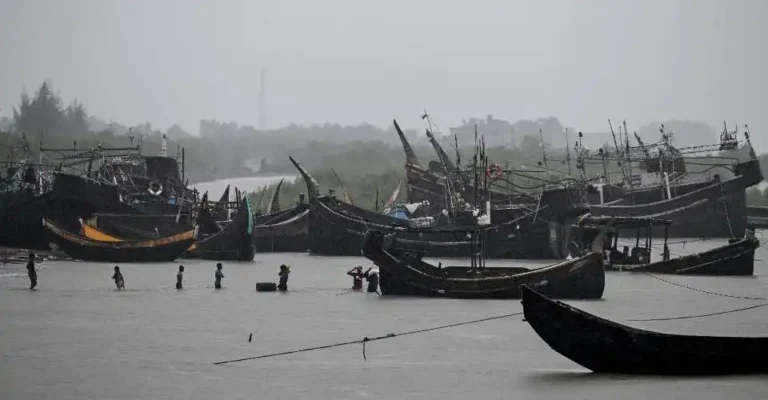
At least nine Rohingya remain missing after a boat carrying people across the Naf River, which separates Bangladesh and Myanmar, capsized amid strong currents and rough waters, according to Bangladeshi authorities.
Police said the passengers were believed to have been fleeing escalating armed conflict in Myanmar’s Rakhine State, where fighting continues between Myanmar’s military and the Arakan Army (AA).
Local fishermen rescued 18 survivors after spotting the vessel sinking near the Bangladesh-Myanmar border. The rescued individuals were later handed over to the Border Guard Bangladesh (BGB) for further processing.
“Some nine individuals are still missing,” Saiful Islam, officer-in-charge of Teknaf Police Station, told AFP.
Local resident Rashid Ahmed said the boat lost control after encountering powerful river currents and high waves before capsizing.
“Nearby trawlers rushed to the scene and rescued people from the sinking boat. Among the 18 rescued, four were boatmen and their associates,” Ahmed said.
Conflict in Rakhine Continues to Drive Rohingya Displacement
The latest incident underscores the continuing humanitarian crisis affecting Rohingya civilians as armed clashes intensify in Myanmar’s Rakhine State.
Since Myanmar’s 2021 military coup, fighting between the military junta and the Arakan Army has expanded across large parts of Rakhine, forcing civilians—including Rohingya communities—to flee violence and insecurity.
Many attempt dangerous crossings into Bangladesh through the Naf River despite the significant risks posed by bad weather, overcrowded boats, and human trafficking networks.
Dangerous Sea and River Crossings Persist
Bangladesh currently hosts more than one million Rohingya refugees, most of whom live in overcrowded camps in Cox’s Bazar after fleeing persecution and military violence in Myanmar, particularly following the 2017 military crackdown.
Humanitarian agencies have warned that repeated reductions in international aid have worsened living conditions inside the camps, leaving many families facing food insecurity, malnutrition, and limited livelihood opportunities.
As a result, increasing numbers of Rohingya continue to undertake dangerous journeys by river and sea in search of safety and better living conditions.
According to the United Nations, more than 5,000 Rohingya refugees have died during perilous maritime journeys across the Bay of Bengal and Andaman Sea over the past decade.
Bangladeshi authorities have not yet confirmed the identities of those still missing, while search efforts continue in the Naf River.