



The global handling of the Rohingya crisis increasingly raises difficult questions about international responsibility, political will, and moral consistency. During Ramadan last year, standing alongside UN Secretary-General António Guterres in a Rohingya refugee camp in Bangladesh, Chief Adviser Professor Muhammad Yunus expressed hope that displaced Rohingya would be able to offer their next Eid prayers in their ancestral homeland of Arakan. For a community that has endured years of persecution and displacement, those words rekindled a fragile sense of optimism.
Yet, with the next Eid now approaching, that hope appears increasingly distant. Instead of progress toward repatriation, the crisis has deepened. Over the past 18 months alone, nearly 200,000 additional Rohingya have crossed into Bangladesh, pushing the total refugee population to an estimated 1.7 million. The promise of return has not materialised; rather, displacement has intensified.
This reality raises a fundamental question: what concrete steps has the United Nations taken to advance the repatriation process since the Secretary-General’s highly symbolic visit to the camps? There has been no visible diplomatic momentum, no meaningful pressure on Myanmar, and no renewed international consensus on accountability—despite the fact that the atrocities committed against the Rohingya have been widely characterised as genocide and crimes against humanity. Instead, the practical burden continues to fall disproportionately on Bangladesh, which is repeatedly urged to keep its borders open and absorb additional refugees.
Compounding this imbalance is the ongoing global funding shortfall. As traditional donors scale back contributions, reports suggest that the UN High Commissioner for Refugees (UNHCR) is seeking alternative funding sources, including from host countries themselves. In this context, Bangladesh’s Ministry of Foreign Affairs has reportedly proposed an annual contribution of USD 10,000 to UNHCR, arguing that donor status would allow the country greater participation in the agency’s decision-making processes.
While the logic of influence through contribution may appear administratively sound, it is deeply problematic in practice. Bangladesh has already demonstrated extraordinary humanitarian commitment. Although it is not a signatory to the 1951 Refugee Convention or its 1967 Protocol, and has no domestic asylum law, the country nevertheless opened its borders and cooperated closely with UNHCR on humanitarian grounds. This generosity has been sustained for years, even as the economic, environmental, and social costs have mounted.
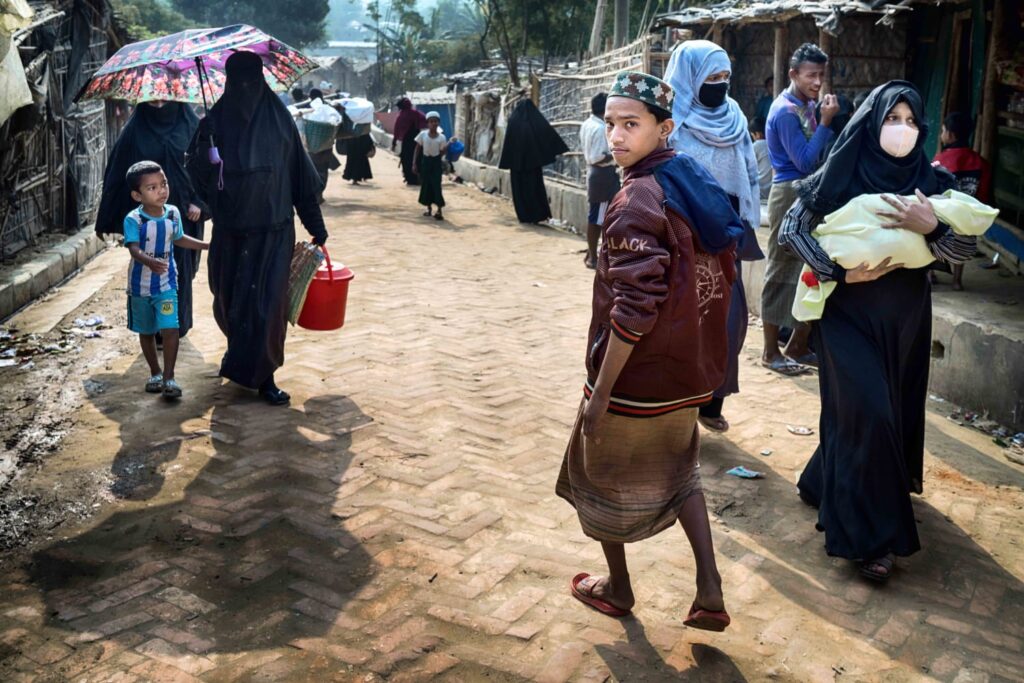
Estimates indicate that Bangladesh spends well over one billion US dollars annually—directly and indirectly—on hosting the Rohingya. Against this backdrop, expecting the host country to financially contribute to UNHCR is not only illogical but ethically indefensible. The primary responsibility for mobilising resources and applying political pressure rests with the UN system and major donor states, not with a developing country already under severe strain.
There are also growing concerns regarding the efficiency and transparency of Rohingya aid delivery. Critics argue that a disproportionate share of international NGO budgets is consumed by administrative and management costs. In the face of a worsening funding crisis, UNHCR must urgently reassess its operational model. Greater engagement of local NGOs could significantly reduce costs while improving contextual effectiveness on the ground.
Ultimately, humanitarian assistance—however generous—cannot substitute for justice. Without sustained international pressure on Myanmar, accountability for past crimes, and a credible, time-bound roadmap for voluntary, safe, and dignified repatriation, the Rohingya crisis will continue to fester. The world cannot afford to allow repatriation to become a forgotten promise, nor can Bangladesh be expected to shoulder an open-ended burden in the absence of global resolve.