


Muslim Settlement in Arakan
Moshe Yegar
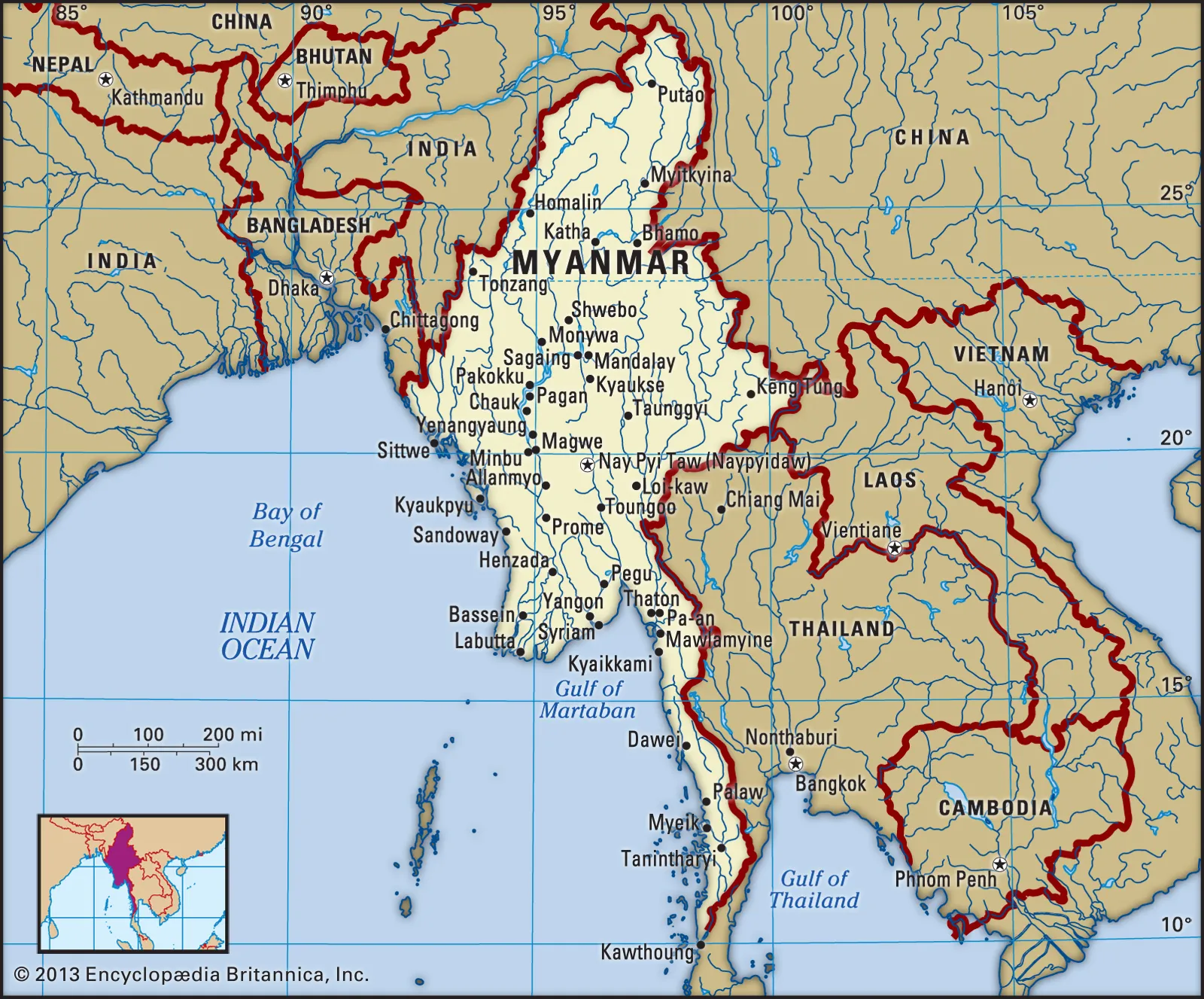
The Arakan District, extending some 350 miles along the eastern shores of the Bay of Bengal is cut off from Burma by a range of near impassable mountains which were an obstacle against permanent Muslim conquest but permitted occasional in roads and contacts between Bengal and Burma. The northern part of Arakan, today called the “Mayu District.” was the point of contact with East Bengal. These geographical facts explain the separate historical development of that area-both generally and in terms of its Muslim population until it was conquered by the Burmese Kingdom at the close of the eighteenth century.
In addition, from the very beginning of Muslim commercial shipping activity in the Bay of Bengal, the Muslim trading ships reached the ports of Arakan just as they did the ports of Burma proper. And as in Burma so, too, in Arakan is there a long tradition of old Indian settlement.
Bengal became Muslim in 1203, but this was the extreme eastern limit of Islamic overland expansion (although the Malay Peninsula and the Indonesian archipelago were Islamized much later by missionaries and merchants who came by sea). In northern Arakan close overland ties were formed with East Bengal. The resulting cultural and political Muslim influence was of great significance in the history of Arakan.1 Actually, Arakan served to a large extent as a bridgehead for Muslim penetration to other parts of Burma, although the Muslims never attained the same degree of importance elsewhere as they did in Arakan.
The influenece of Bengal on Arakan was negligible up to 1430. This independent kingdom turned westward, toward Bengal, as a result of the growing power of the Burmese Court of Ava. In 1404, the King of Arakan, Narameikhla (1404-1434), was forced to flee the Burmese to Gaur, capital of the Bengal Sultanate, which 86 years earlier had already become independent of the Mogul Emperor in Delhi. Ahmad Shah, Sultan of Gaur, welcomed the refugee, Narameikhla remained at the court of Gaur, where he served as an officer in Ahmad Shah’s army and fought in his wars. In 1430, Ahmad Shah’s successor, Nadir Shah, granted Narameikhla’s request and gave him an army betrayed under the command of a general named Veli Khan, in order to regain his throne. This general betrayed him, but sometime after that Narameikhla succeeded in reconquering Arakan with the help of a second army supplied by Nadir Shah. Upon his return, Narameikhla founded a new city, Mrohaung (also called Mrauk-U), which remained the capital until 1785 when Arakan was conquered by Burma. Narameikhla’s Muslim soldiers, who came with him from Bengal, settled in a village near Mrohaung and built the Sandi Khan Mosque, which still exists today. Muslim influence in Arakan, then may be said to date from 1430, the year of Narameikhla’s return. As a resuit of the close land and sea ties between the two countries which continued to exist for a long time thereafter, the Muslims played a decisive role in the history of the Arakan Kingdom.2


