


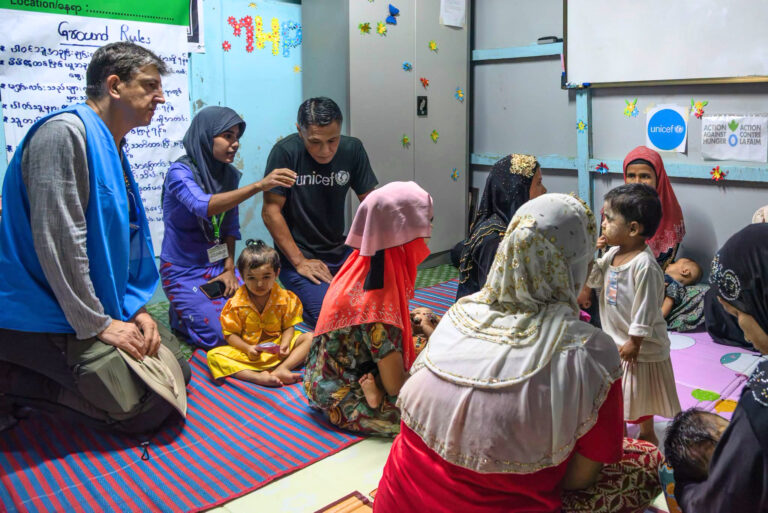
Senior representatives from the United Nations High Commissioner for Refugees (UNHCR) and the United Nations Children’s Fund (UNICEF) have visited conflict-affected communities in Myanmar’s Rakhine State to assess humanitarian conditions and meet displaced families, as tens of thousands of civilians continue to face worsening displacement, food insecurity, and movement restrictions amid ongoing fighting.
According to UNICEF Myanmar, UNHCR Country Representative Barnaby Jones and UNICEF Country Representative Yasumasa Kimura traveled to Rakhine to meet internally displaced children, young people, and families affected by the armed conflict.
UN Officials Meet Displaced Families
During the visit, the UN representatives held consultations with displaced communities to better understand their daily challenges and humanitarian needs.
“We met with displaced children, young people and families and listened closely to their stories. Understanding the realities of daily life can help humanitarian organizations provide more effective support,” UNICEF Myanmar quoted the officials as saying.
The agencies noted that despite prolonged displacement, children and families continue to demonstrate remarkable resilience.
According to the statement, the consultations are helping shape ongoing humanitarian assistance in areas including shelter, child protection, nutrition, education, and essential services.
UN Agencies Reaffirm Commitment
UNHCR and UNICEF said they will continue working together to support displaced families and ensure that children affected by conflict have access to protection, education, healthcare, and opportunities for a safer future.
“From shelter and protection to nutrition and access to education, these close consultations are shaping the ongoing response,” the joint statement said.
The agencies reaffirmed their commitment to helping displaced communities rebuild their lives despite the continuing humanitarian crisis.
Conflict Continues to Drive Displacement
The visit comes as fighting continues in Kyaukpyu and Sittwe, where humanitarian sources say tens of thousands of civilians have been displaced and remain in urgent need of assistance.
Residents report that access to humanitarian aid remains limited, particularly for displaced people sheltering in rural communities around Sittwe.
Displaced Residents Describe Food Shortages
A displaced resident from Sittwe told KPN that families forced from their homes by the conflict have struggled to receive regular humanitarian assistance.
According to the resident, thousands of displaced people have been living in monasteries and temporary shelters since 2024 after fleeing military operations.
“There are many months when we receive no government support and no assistance from international organizations. We are not allowed to leave the city or even fish in the sea. We are surviving with hunger,” the resident said.
KPN could not independently verify all aspects of the resident’s account.
Civilians Trapped by Fighting
Displaced residents said many civilians remain unable to leave Sittwe due to military-imposed movement restrictions, while some attempting to travel to areas outside military control risk arrest.
With fighting reported only a few miles from Sittwe, residents say fear is growing that civilians remaining inside the city could become trapped if the conflict further intensifies.
Humanitarian organizations have repeatedly called for safe, sustained humanitarian access and the protection of civilians in accordance with international humanitarian law.