


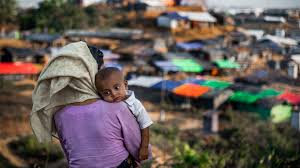
The Bangladesh government has pledged to improve living conditions for Rohingya refugees in Cox’s Bazar while simultaneously intensifying its focus on camp security, criminal activity, and long-term regional stability amid growing pressure on one of the world’s largest refugee settlements.
The dual message emerged during the first high-level visit to the Rohingya camps by Bangladesh’s Foreign Ministry since the country’s new administration assumed office — a visit observers say reflects both humanitarian concern and increasing security calculations surrounding the protracted refugee crisis.
Led by State Minister for Foreign Affairs Shama Obaed Islam, the delegation toured refugee camps in Cox’s Bazar, meeting Rohingya community representatives, humanitarian agencies, and security officials while assessing conditions inside camps now hosting approximately 1.3 million displaced Rohingya.
Bangladesh officials publicly reiterated commitments to humanitarian protection and voluntary repatriation. Yet behind the official messaging lies growing concern inside Dhaka over deteriorating security conditions, rising criminal networks, and the long-term implications of maintaining a massive stateless population near a sensitive border region.
Humanitarian Crisis Increasingly Intertwined With Security Concerns
Since the mass exodus of Rohingya civilians from Myanmar in 2017, Bangladesh has attempted to balance humanitarian obligations with domestic security management. Nearly nine years later, officials acknowledge the crisis has evolved into a complex challenge involving law enforcement, border security, social stability, and regional geopolitics.
Authorities have repeatedly warned that overcrowded camp conditions, limited economic opportunities, aid reductions, and prolonged uncertainty have contributed to the emergence of criminal groups operating within and around refugee settlements.
Bangladeshi security agencies have identified growing concerns involving narcotics trafficking, human smuggling, extortion networks, kidnappings, armed gang violence, and informal militant structures inside portions of the camps.
Local residents in Cox’s Bazar have increasingly voiced anxiety over security deterioration, with some community leaders alleging spillover effects on surrounding host communities, including rising criminality, labor competition, environmental degradation, and pressure on local infrastructure.
While humanitarian organizations continue emphasizing civilian protection and refugee rights, security officials argue that deteriorating conditions create vulnerabilities exploitable by organized criminal networks operating across the Bangladesh-Myanmar maritime corridor.
Government Seeking Balance Between Enforcement and Humanitarian Image
During the visit, Bangladeshi officials emphasized that improving living standards inside the camps remains a government priority. Delegates inspected food distribution centers operated by the World Food Programme, educational facilities, women-led community programs, and healthcare services run by Médecins Sans Frontières.
Officials also met elected Rohingya representatives, including women and youth leaders, where discussions reportedly focused on security conditions, education access, community governance, and future repatriation prospects.
State Minister Obaed assured refugees that Bangladesh remains committed to creating conditions supportive of the “safe, voluntary, and dignified” return of Rohingya to Rakhine State.
However, analysts say the government is also attempting to reinforce international perceptions that Bangladesh continues acting responsibly despite increasing domestic frustration over the prolonged burden of hosting refugees.
Dhaka has repeatedly warned that the international community cannot expect Bangladesh to shoulder the crisis indefinitely without stronger diplomatic engagement, financial assistance, and progress toward repatriation.
Camp Security Operations Expanding
Over the past several years, Bangladesh authorities have significantly expanded security measures inside the camps.
Armed Police Battalion units, intelligence surveillance, fencing projects, watchtowers, biometric registration systems, and movement restrictions have all become central components of camp governance.
Officials argue these measures are necessary to combat armed gangs and transnational trafficking networks that increasingly target vulnerable Rohingya populations.
Security operations intensified particularly after a series of violent incidents, including assassinations of Rohingya community leaders, clashes between rival groups, abductions, and attacks linked to organized criminal actors.
Human rights observers, however, have cautioned that aggressive security operations must avoid collective punishment or excessive restrictions on civilian movement and livelihoods.
Some Rohingya residents and aid workers privately express concern that tighter controls, combined with shrinking educational and employment opportunities, may deepen frustration among refugee youth already facing prolonged statelessness and uncertain futures.
Local Communities Demand Greater Protection
The refugee crisis continues to reshape social and economic dynamics across Cox’s Bazar, where local communities have for years shared resources, infrastructure, and public services with the refugee population.
Residents in surrounding host areas increasingly demand stronger government action against trafficking, drug smuggling, illegal arms circulation, and environmental damage linked to deforestation around camp zones.
Security analysts warn that without sustained international support, tensions between host communities and refugees could worsen as economic pressures deepen.
Aid agencies also warn that reductions in humanitarian assistance risk accelerating insecurity inside the camps themselves, potentially increasing the influence of armed groups and criminal intermediaries controlling informal camp economies.
Repatriation Still Politically Distant
Despite repeated diplomatic efforts, Bangladesh’s core objective — large-scale repatriation of Rohingya refugees to Myanmar — remains stalled.
Bangladesh officials continue insisting that repatriation must be safe, voluntary, and conducted with international guarantees. Yet ongoing conflict inside Rakhine State, the collapse of civilian governance in Myanmar following the 2021 military coup, and continued allegations of abuses against Rohingya civilians have made returns increasingly unrealistic in the near term.
Regional observers note that Bangladesh now faces a strategic dilemma: maintaining humanitarian credibility internationally while containing growing domestic security and economic pressures tied to the prolonged refugee presence.
The recent Foreign Ministry visit appears designed to signal both messages simultaneously — reassurance to refugees and humanitarian partners, while also demonstrating that Bangladesh intends to maintain firm control over camp security and internal stability.
As international attention increasingly shifts toward other global crises, Bangladeshi officials warn that neglecting the Rohingya issue risks transforming a humanitarian emergency into a deeper regional security challenge affecting South and Southeast Asia.