


Bangladesh authorities have renewed assurances that Rohingya children living in refugee camps will continue receiving education support, but growing operational pressures, aid dependency, political sensitivities, and tensions surrounding NGOs and international agencies are raising serious questions about the future of learning inside the world’s largest refugee settlement.
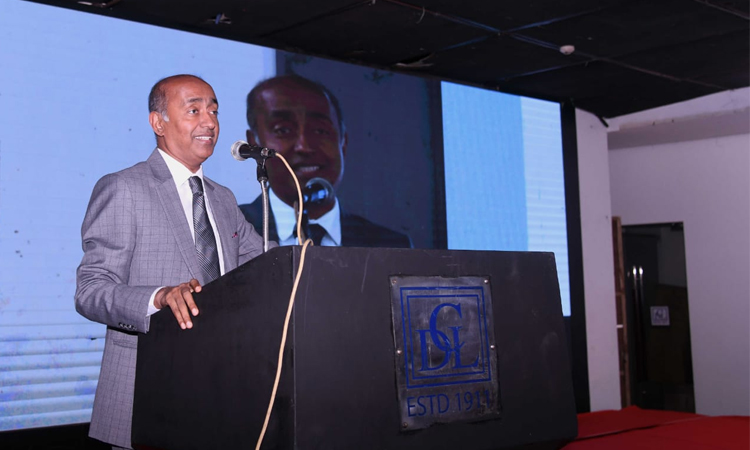
During a recent visit to Rohingya learning centres in Ukhiya, State Minister for Primary and Mass Education Bobby Hajjaj stated that the government remains committed to ensuring a “safe, humane, and education-friendly environment” for Rohingya children.
Yet interviews with teachers, aid workers, camp residents, and policy observers suggest that the education system inside the camps is increasingly strained by funding uncertainty, bureaucratic restrictions, infrastructure limitations, and the complex relationship between the Bangladesh government, local NGOs, and international humanitarian agencies.
A Humanitarian System Under Pressure
Nearly nine years after the 2017 mass exodus from Myanmar, more than one million Rohingya refugees remain confined to camps in Cox’s Bazar, where education has become one of the most politically sensitive humanitarian issues.
For years, Rohingya children were largely denied access to formal education beyond basic learning centres. Bangladesh authorities initially restricted structured schooling over concerns that long-term integration could complicate future repatriation efforts.
The eventual introduction of the Myanmar curriculum — now taught up to Grade 12 in selected learning centres — was widely welcomed by humanitarian organizations as a breakthrough. However, implementation remains uneven and fragile.
Camp-based teachers told KPN that overcrowded classrooms, shortages of trained educators, inconsistent teaching materials, and limited electricity continue to undermine learning conditions.
“We have students with dreams, but the system is still temporary,” one Rohingya teacher said on condition of anonymity.
Growing Friction Between NGOs, INGOs, and Authorities
Behind the public messaging of cooperation, tensions have increasingly emerged between aid organizations and government authorities over how education programmes should operate.
Several local NGOs privately complain that international NGOs (INGOs) receive greater funding access and decision-making influence, while local organizations often remain limited to subcontracted implementation roles despite having stronger grassroots connections inside the camps.
At the same time, some government officials have expressed concern that parts of the humanitarian system have become overly dependent on foreign donor priorities.
Bangladesh authorities have periodically tightened oversight of NGO activities, particularly around education, protection programming, and youth engagement, citing security concerns and fears of “informal integration” of refugees into Bangladeshi society.
Aid workers say approval processes for educational materials, teacher recruitment, and programme expansion have become increasingly complex over recent years.
“There is always a balancing act between humanitarian needs and political sensitivities,” one humanitarian official familiar with camp operations told KPN.
Funding Crisis Threatens Education Programmes
Humanitarian agencies warn that worsening global funding shortages could significantly affect education services for Rohingya children.
Several aid organizations operating in Cox’s Bazar have already reduced staff, consolidated programmes, or scaled back operational activities due to declining donor contributions.
Education experts say funding cuts disproportionately affect adolescents and secondary-level learners, many of whom already face limited opportunities beyond camp-based learning centres.
Representatives from UNICEF and BRAC continue supporting learning centres under the Myanmar curriculum, but humanitarian officials warn that long-term sustainability remains uncertain without renewed international commitments.
“The risk is not just losing classrooms,” one education specialist explained. “The bigger danger is creating a generation trapped between displacement, statelessness, and hopelessness.”
Security Concerns Shape Government Policy
Bangladesh’s approach toward Rohingya education cannot be separated from broader security concerns inside and around the camps.
Authorities have repeatedly cited rising criminal activity, trafficking networks, armed group influence, and camp violence as reasons for maintaining tight control over humanitarian operations.
Security analysts say officials fear that unemployed and frustrated youth could become increasingly vulnerable to criminal recruitment, extremist narratives, or dangerous migration routes if educational opportunities continue shrinking.
At the same time, Rohingya community leaders argue that restricting education itself may deepen instability.
“Without education, young people become more desperate,” one community representative told KPN.
Local NGOs Say They Are Overlooked
Several Bangladesh-based civil society groups working in Cox’s Bazar told KPN they often struggle to compete with large international organizations for donor support and operational visibility.
Local NGO representatives argue they possess deeper cultural understanding and stronger community trust but receive significantly less institutional backing.
Some also criticized what they described as a “top-down humanitarian structure,” where major policy decisions are often shaped by international agencies and donor governments rather than local actors or refugee communities themselves.
International organizations, however, maintain that coordination with both the Bangladesh government and local partners remains essential for maintaining humanitarian standards and accountability.
The Politics of “Temporary Education”
The Bangladesh government continues insisting that education services inside the camps are humanitarian measures — not steps toward permanent settlement.
Officials have repeatedly emphasized that the ultimate solution remains the safe, voluntary, and dignified repatriation of Rohingya refugees to Myanmar.
However, with conditions inside Myanmar still unstable and conflict continuing across Rakhine State, prospects for large-scale repatriation remain distant.
This has created a growing contradiction inside the camps: while humanitarian agencies promote long-term educational continuity, the political framework surrounding the Rohingya presence remains officially temporary.
For many Rohingya families, that uncertainty shapes every aspect of their children’s future.
A Generation Waiting
As ministers, aid agencies, and international donors debate policy frameworks, more than half of the Rohingya population in Cox’s Bazar remains under the age of 18.
Many children have now spent nearly their entire lives inside refugee camps.
Education workers warn that unless stable funding, stronger coordination, and clearer long-term policies emerge, the Rohingya crisis could evolve from a humanitarian emergency into a generational collapse of opportunity.
For Bangladesh, the challenge has become increasingly complex: balancing humanitarian obligations, domestic political pressures, national security concerns, donor expectations, and the uncertain future of Myanmar itself.
For Rohingya children inside the camps, however, the issue remains far simpler — whether they will be allowed a future beyond displacement.


