


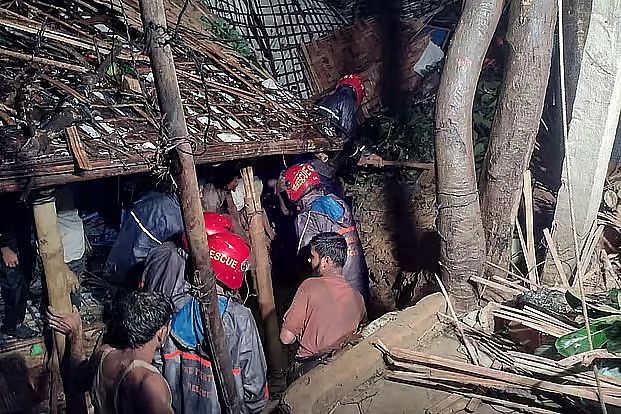
At least 95 landslides have struck the Rohingya refugee camps in Ukhiya and Teknaf over a six-day period, killing 15 refugees, displacing 4,307 people, and affecting more than 26,000 others, according to the United Nations High Commissioner for Refugees (UNHCR).
In a situation update released on Thursday evening, UNHCR warned that millions of Rohingya refugees living in the overcrowded camps remain at serious risk as heavy monsoon rains continue across southeastern Bangladesh.
95 Landslides Reported in Six Days
UNHCR said the landslides occurred between July 4 and July 9, causing widespread destruction to shelters, roads, and community facilities across the refugee settlements.
According to the agency:
- 95 landslides were recorded.
- 15 Rohingya refugees lost their lives.
- 4,307 people were left homeless.
- 26,119 refugees were affected by the disasters.
UNHCR Representative in Bangladesh Ivo Freijsen said humanitarian agencies, working alongside the Government of Bangladesh, are carrying out emergency rescue operations, relocating vulnerable families to safer locations, and providing food, emergency shelter, healthcare, and other life-saving assistance.
However, weather forecasts indicating heavy to very heavy rainfall through July 11 mean the threat of additional landslides and flash floods remains high.
Camps Face Growing Humanitarian Emergency
The Rohingya Coordination Platform (RCP) reported that continuous rainfall has increased incidents of flash floods and landslides, severely damaging shelters, learning centres, and other critical infrastructure throughout the camps.
Humanitarian agencies warned that unstable hillsides and overcrowded settlements continue to expose thousands of refugee families to life-threatening risks.
Children Among Victims
One of the deadliest incidents occurred on Wednesday afternoon at Camp 5, Block A-11 in Ukhiya, where a retaining wall and hillside collapsed onto a madrasa.
The collapse killed five female students, while eight other children sustained serious injuries and remain hospitalized.
Two days earlier, separate landslides in Jamtoli, Kutupalong, and Balukhali camps claimed the lives of at least eight Rohingya refugees, including women and children.
The rising death toll has deepened fear and grief throughout the refugee camps.
Families Mourn Lost Children
Among those killed was 13-year-old Rashida Begum, daughter of Hasim Ullah, who had been studying to memorize the Holy Quran.
Her father said Rashida had only three months remaining before completing her Hifz studies.
“I took her to the madrasa as I always did. Later that afternoon, I received the news that the wall had collapsed and she had died,” Hasim Ullah said.
Another grieving father, Abdus Shukur, lost his daughters Umme Nejatul (13) and Umme Salma (12) in the same incident.
“My daughters woke me every morning by reciting the Quran. Now our home is filled with grief, and we spend sleepless nights,” he said.
Mohammad Elias, another bereaved parent, said his family had fled persecution in Myanmar only to face new dangers inside the refugee camps.
“We escaped the Myanmar military, but here we fear landslides during the monsoon, fires in winter, and violence from armed groups,” he said.
Nine Years After Exodus, Repatriation Still Stalled
More than 1.4 million registered Rohingya refugees currently live in 33 refugee camps across Ukhiya and Teknaf.
Around 800,000 fled to Bangladesh following the Myanmar military’s crackdown in August 2017.
UN agencies note that no large-scale repatriation has taken place during the past nine years.
Instead, another 152,000 Rohingya have fled Myanmar’s Rakhine State over the past 18 months, escaping renewed violence and seeking refuge in Bangladesh.
Newly Arrived Refugees Face Higher Risks
Kamrul Islam, a Rohingya community leader in Balukhali Camp, said many newly arrived refugees have not yet received officially allocated shelters.
As a result, families often construct makeshift homes by cutting into unstable hillsides, significantly increasing landslide risks during the monsoon season.
Teknaf Camps Also Under Threat
The danger extends beyond Ukhiya.
Officials said more than 30 landslides have been reported across seven Rohingya camps in Teknaf, where approximately 200,000 refugees live.
Although no fatalities have been reported there so far, authorities have relocated around 100 high-risk families to safer locations, including schools, mosques, cyclone shelters, and relatives’ homes.
Camp authorities said awareness campaigns and volunteer patrols have also been intensified to reduce disaster risks.
Community leaders warned that continuing rainfall has heightened anxiety among refugees as unstable hillsides remain vulnerable to further collapse.


