


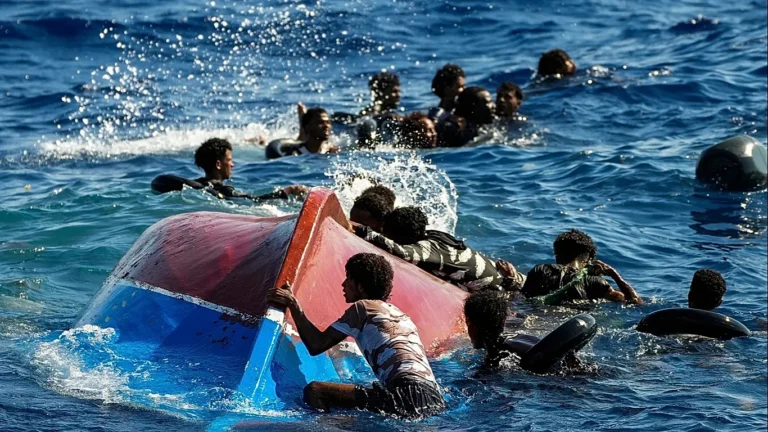
Nearly 8,000 people died or went missing along global migration routes in 2025, underscoring what the International Organization for Migration (IOM) described as a continuing global failure to prevent avoidable deaths.
In a report released Tuesday, the International Organization for Migration said at least 7,904 migrants were recorded as dead or missing last year. Although lower than the 9,200 recorded in 2024—the highest annual figure on record—the agency stressed that the numbers remain alarmingly high.
Since 2014, the IOM’s Missing Migrants Project has documented more than 80,000 deaths and disappearances worldwide. The agency cautioned that the actual number is likely significantly higher due to underreporting and limited data collection in many regions.
Families Left Behind
The report estimates that at least 340,000 family members have been directly affected by the missing migrant crisis over the past decade. These families often face prolonged uncertainty, alongside severe psychological, social, legal, and economic consequences.
“Behind these figures are individuals who embarked on dangerous journeys and families left waiting for answers that may never come,” said Amy Pope.
Drivers of Risky Migration
The IOM highlighted that migrants are increasingly forced into irregular and hazardous routes due to the lack of safe and legal migration pathways. Conflict, climate pressures, and restrictive migration policies continue to shape movement patterns globally.
The agency also noted that 2025 was marked by significant reductions in humanitarian funding and growing restrictions on access to information about migration routes, contributing to what it described as the “invisibility” of many missing migrants.
Regional Trends
In the Americas, northbound migration through Central America declined sharply compared to 2024. According to IOM officials, this shift was largely driven by changes in migration policy by the United States, including stricter border controls.
While reported deaths along these routes decreased, the agency warned that limited data availability from the United States and Mexico—combined with reduced operational capacity due to funding cuts—may obscure the true scale of the situation.
In Europe, overall migrant arrivals fell, but patterns shifted. The IOM reported that Bangladeshi nationals became the largest group arriving, while Syrian arrivals declined amid political and policy changes.
Sea routes to Europe remained particularly dangerous, with approximately 3,400 deaths and disappearances recorded in 2025. Of these, 1,330 occurred along the central Mediterranean route, while more than 1,200 were reported on the West Africa–Atlantic route toward Spain’s Canary Islands.
Deadliest Year for Bay of Bengal Route
The IOM recorded nearly 900 deaths and disappearances in 2025 along maritime routes in the Bay of Bengal and Andaman Sea—corridors used predominantly by Rohingya refugees.
The agency described 2025 as the deadliest year on record for this route, highlighting the extreme risks faced by Rohingya fleeing persecution and displacement.
Call for Global Action
The IOM urged governments to strengthen international cooperation and demonstrate sustained political commitment to reducing migrant deaths. It emphasized the importance of improving data collection, expanding safe migration pathways, and addressing root causes such as conflict and economic instability.
“Data is essential for understanding migration risks and designing interventions that save lives,” said Amy Pope. “But above all, political will is needed to prevent these tragedies.”